What flooring does a HYROX gym actually need?
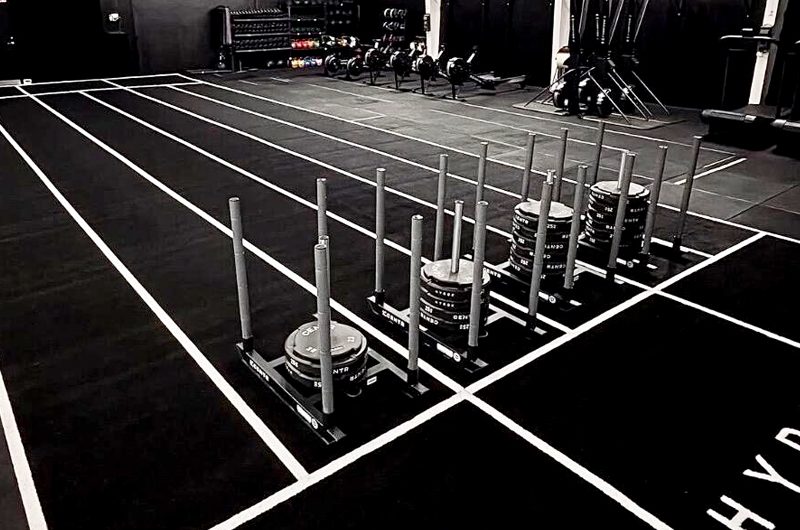
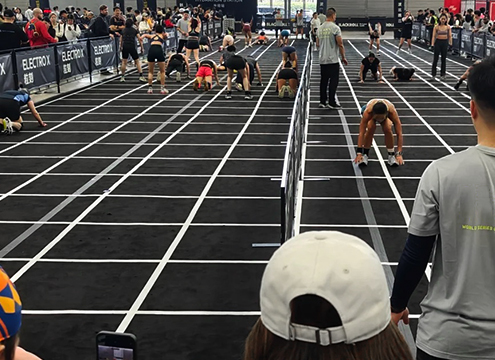
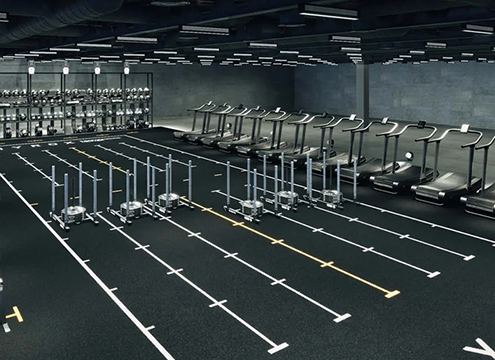
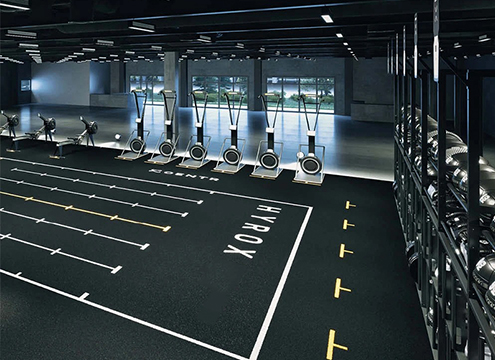
HYROX is eight functional stations and eight 1 km runs, and a single event brings hundreds of athletes through the same building in a day. That shapes the flooring brief. The running loop and the sled track take the most abuse, and they need different surfaces: turf for the sled push and sled pull lanes, and a rubber or reinforced floor for the ski erg, rowing, burpee broad jump and the loaded carry stations. Gyms that get this right buy less flooring overall, because each surface is doing the job it was designed for.
Most of the HYROX training floors we supply are a combination: two or three turf lanes for the sled work, plus rubber for everything else. This page covers what to specify for the turf side, which is the part that fails first if it is chosen on price alone.
Why turf, and which turf
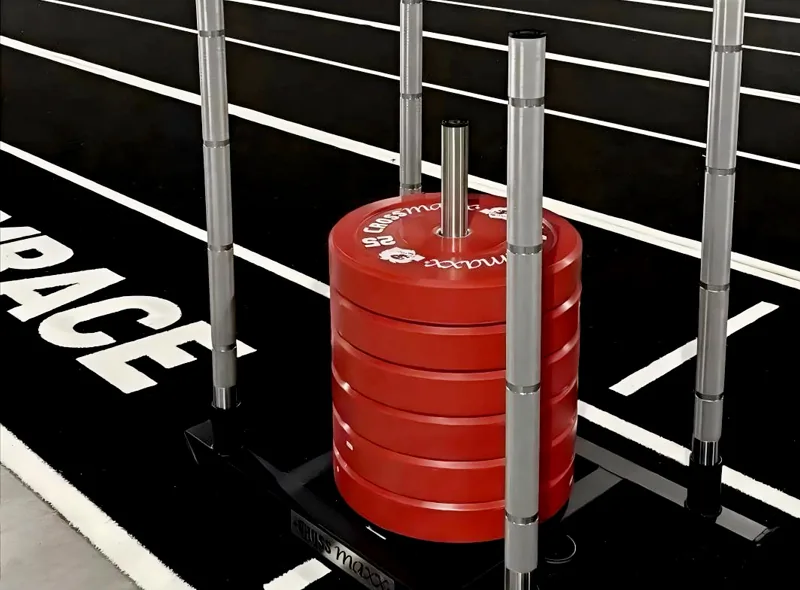
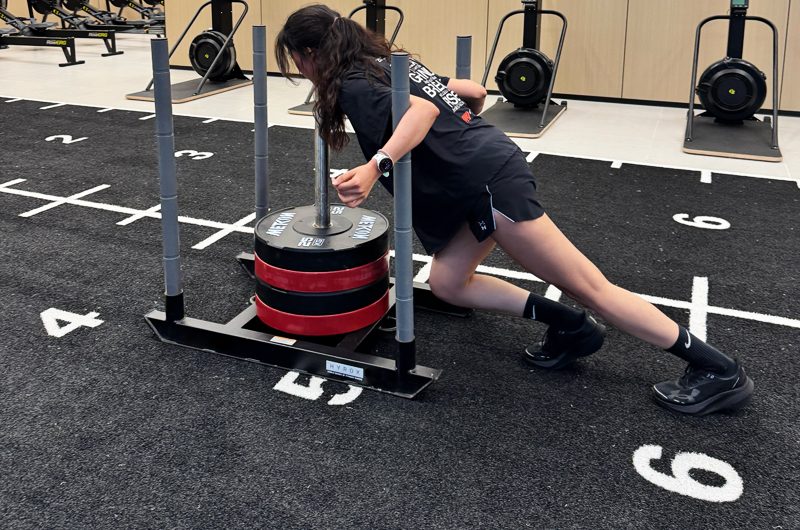
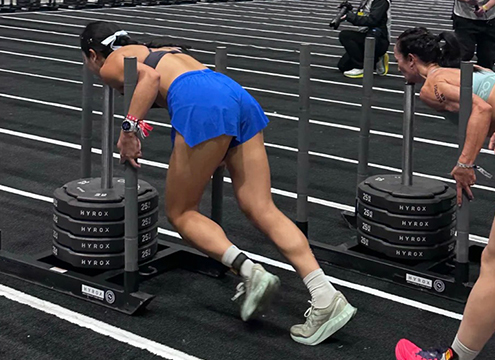
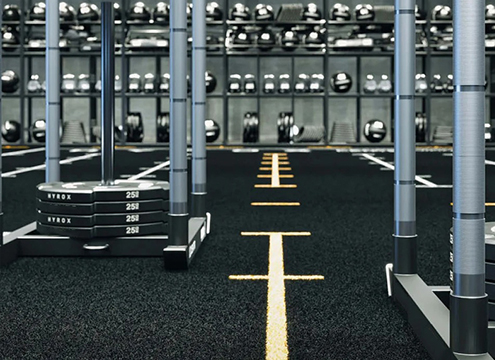
The sled push and sled pull are the reason turf exists in a HYROX gym. The sled has to slide under heavy load without tearing up the surface, the athlete has to get grip through a shoe that is pushing rather than running, and the lane has to still look presentable after thousands of passes.
Three things decide whether a turf lane survives a HYROX training schedule:
- Pile height. 12–15 mm is the working range. Longer pile swallows the sled and makes the push feel dead; shorter pile wears through faster and gives no grip.
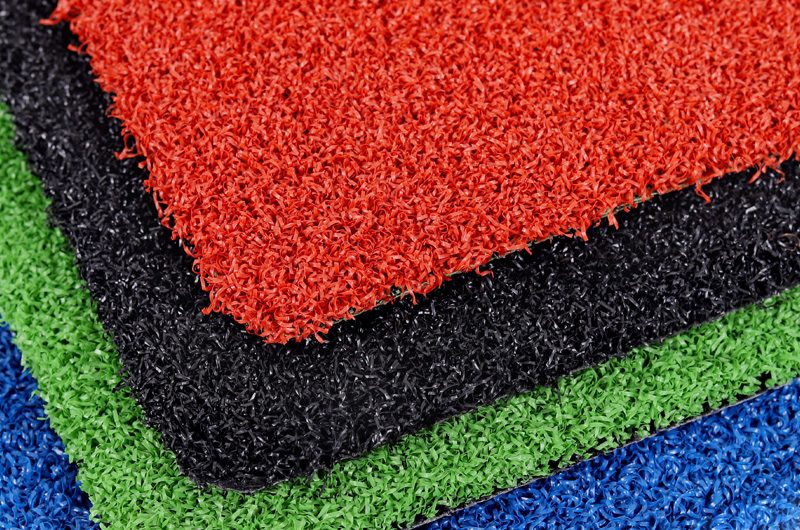
- Yarn resilience. The lane takes a concentrated load in a narrow strip, so the fibre has to spring back. Crimped and KDK yarns outperform flat tape here, which is why most gym turf is specified with a crimped or textured yarn rather than landscape fibre.
- Backing stability. A non-perforated or lightly perforated backing holds the lane flat under load. If the backing puckers, the sled catches on the seam and the lane is ruined.
Sled track and lane specification
| Pile height | 12–15 mm | Long enough to grip, short enough that the sled keeps moving |
| Yarn | KDK crimped or textured monofilament | Recovers after loading instead of staying flat |
| Density | High — denser than a landscape turf of the same height | Resists wear in the narrow band the sled runs on |
| Backing | PP + net + SBR, stable under load | Keeps the lane flat so the sled does not catch |
| Infill | None, or a light silica sand dressing | Unfilled or lightly filled keeps the surface fast |
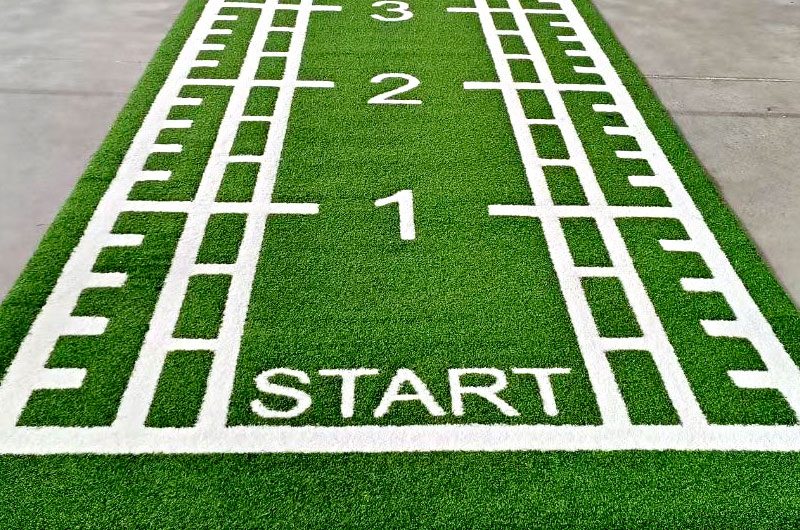
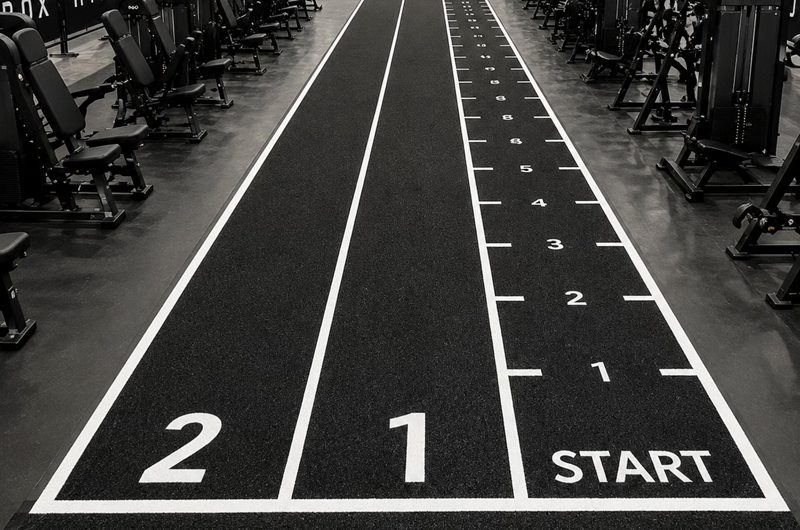
| Lane width | 1.2–1.5 m per lane | Matched to sled width plus foot room |
| Lane length | 20–25 m | Matches the longest sled push distance in the format |
Our 15 mm gym turf and the KDK crimped gym turf are both built for this job: short, dense, UV-stabilised and supplied in the roll widths that keep lane seams to a minimum.
The base under the turf is half the result
A turf lane laid on an uneven base will show every dip within a month, and the sled will find every one of them. For an indoor HYROX floor the turf normally goes over a flat, hard screed with a thin underlay for tolerance — not over a compacted aggregate base as you would outside. Confirm the finished floor height with the turf supplier before the screed is poured, because the turf plus underlay thickness has to match the rubber areas exactly or the athletes trip at the transition.
How the turf and rubber areas fit together
The transition between turf lanes and rubber station flooring is where most build problems show up. Two rules make it work: keep the finished heights identical, and edge-fix the turf so the edge cannot lift. If you are laying turf lanes side by side, have them cut and seamed at the factory into as few pieces as the room allows — every extra seam is a place the sled can catch.
Colour and branding
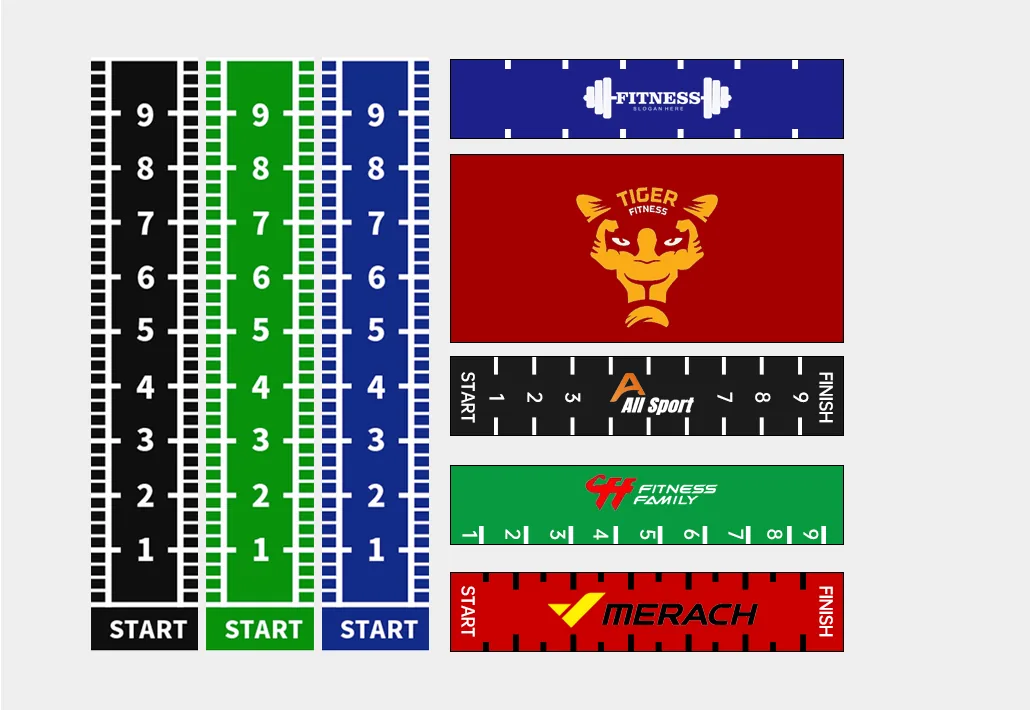
Most HYROX training floors use black, grey or dark green for the main area with a distinctive colour on the sled lanes. We produce custom colours to a sample, and can hold the same colour reference across repeat orders, which matters if you are fitting out several sites and want them to look like one brand.
Ordering turf for a HYROX gym
Send us the floor plan, the lane count and the sled weight you train with, and we will propose a pile height, density and backing build, plus a cutting plan that minimises seams. Small orders can be shipped for a single studio; multi-site operators usually order lanes together so that every site gets the same batch.
Frequently asked questions
What thickness of turf is best for sled pushes?
12–15 mm is the standard range for sled lanes. Below 12 mm the surface wears quickly and gives little grip; above 15 mm the sled starts to dig in and the push feels heavy rather than fast.
Does HYROX turf need infill?
Usually not. Unfilled turf keeps the surface fast and avoids loose infill being dragged around a gym floor. A very light silica sand dressing can be used if the lane needs a little more weight, but it is not required.
Can I use landscape turf for a sled track?
We would not recommend it for a commercial gym. Landscape turf is built for appearance, not for a concentrated sliding load in a narrow lane, and it typically flattens or wears through where the sled runs.
How long do the lanes last?
Service life depends on traffic, sled weight and how the lane is rotated. Commercial studios typically plan on rotating or replacing the sled lanes well before the rest of the floor, which is another reason to keep the lanes as replaceable, standard-width rolls rather than one bespoke piece.
Do you supply outside the format itself — for a training gym rather than an event?
Yes. Most of our gym turf goes into training facilities that run HYROX-style conditioning rather than official events. The specification is the same; only the quantity changes.
Can you match the colour of our existing lanes?
Yes — send a sample or a colour reference and we will match it and hold that reference for repeat orders.