
Wholesale Football Field Grass & Soccer Pitch Turf
Wholesale football field grass is specified by application, pile height, density, yarn and loading volume rather than selected from a single stock roll. LFL Grass supplies 45–50 mm football turf for clubs, schools, training grounds and municipal pitches, with written specifications, 40HQ loading plans and EXW, FOB, CIF or DDP delivery.

Wear Resistance
Stable fibers under frequent play and cleat pressure
Safety Performance
Shock pad reduces ankle and knee impact

All-Weather Play
usable after rain keeps the field Fast drainage

UV Stability
Fade-resistant for long-term sunlight exposure

Eco-Friendly
Low heavy metal content,child-field compliant

Low Maintenance
No watering, mowing or fertilizing required
Football Artificial Turf
Highly wear-resistant football artificial grass, with good rebound of grass fibers, excellent athletic foot feel, UV resistance and sun resistance, quick drainage, all-weather availability, low maintenance, suitable for various football field construction
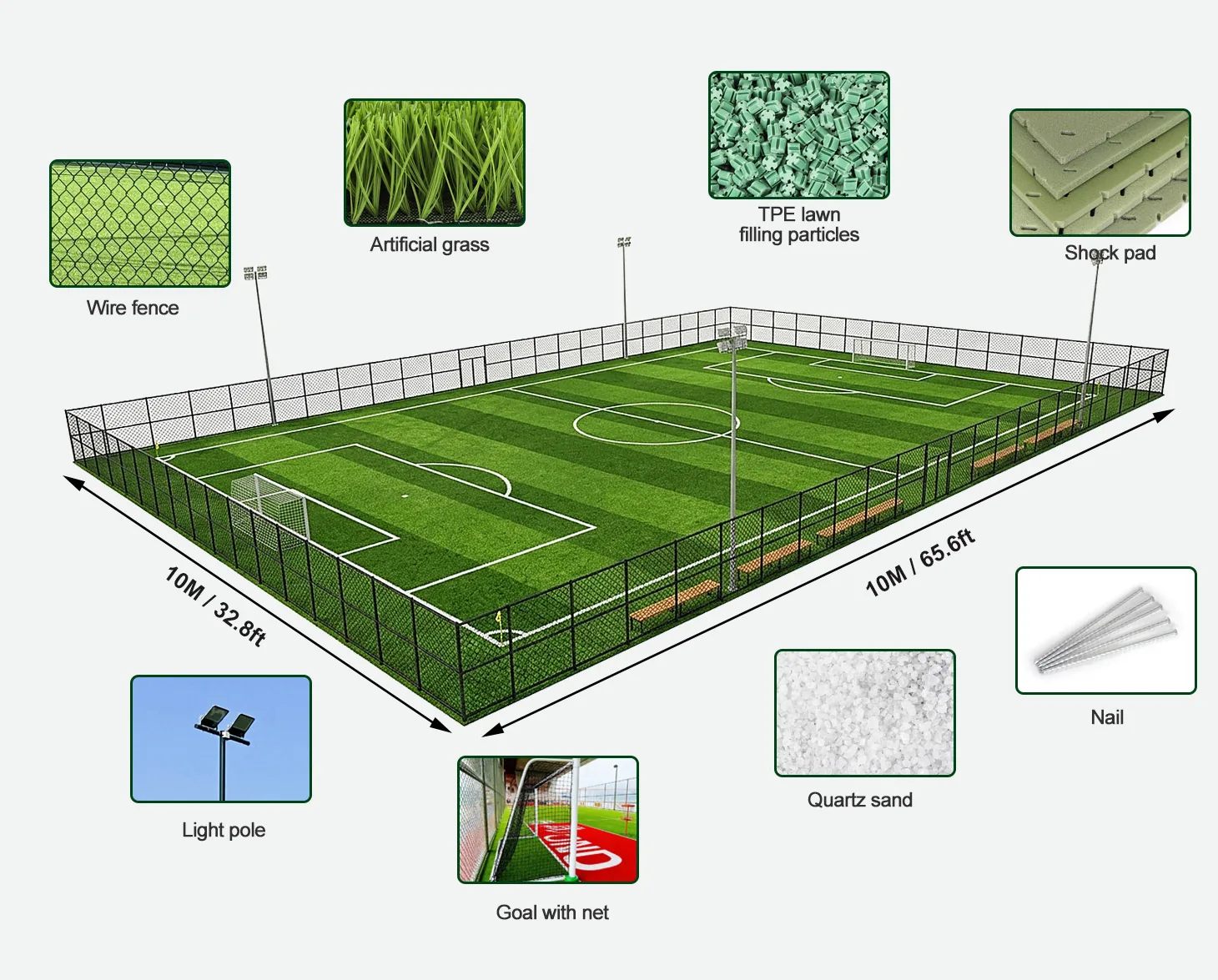
One-Stop Football Field Solutions
11 player standard professional football field, Artificial grass + Wire fence + Shock pad + TPE lawn filling particles + Quartz sand + Goal with net + Nail
Application Scenarios
Widely used in standard football fields, campus playgrounds, five-a-side stadiums, club training grounds, and community sports spaces, suitable for professional competitions, daily training, campus sports teaching, and youth sports play, and adaptable to various sports engineering paving.
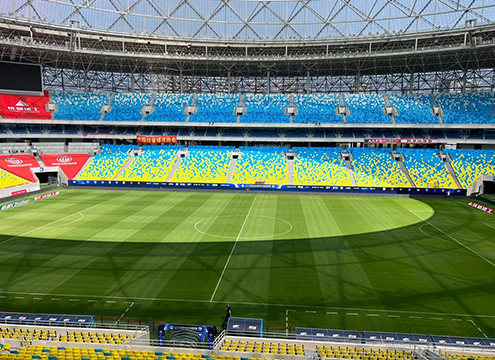
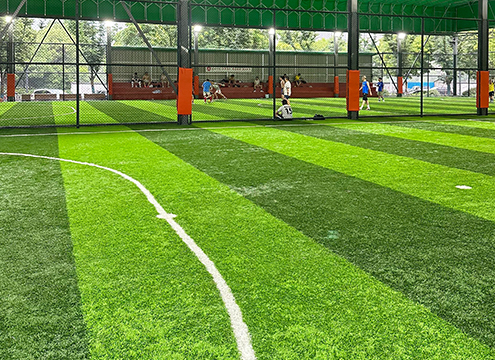
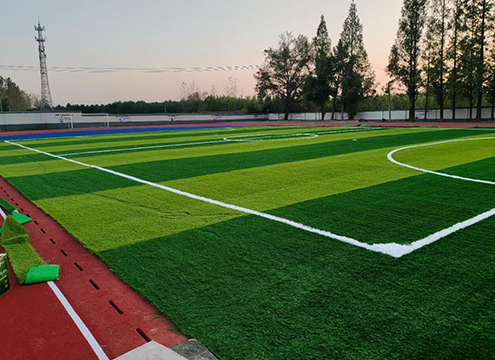
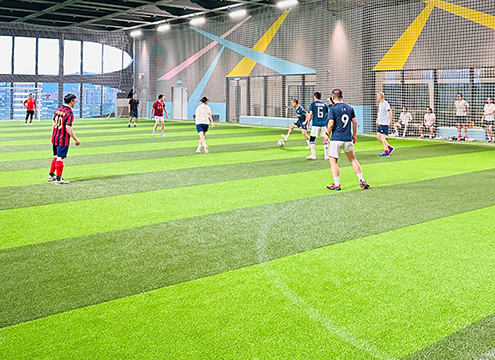
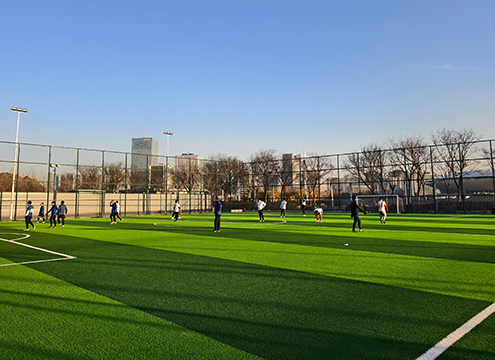
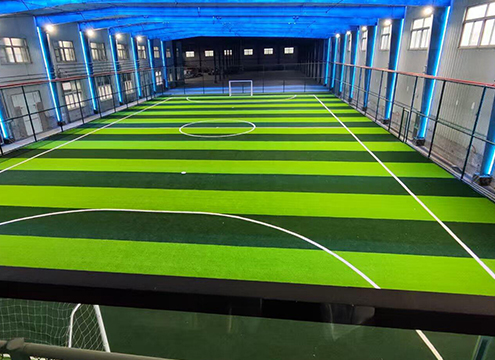
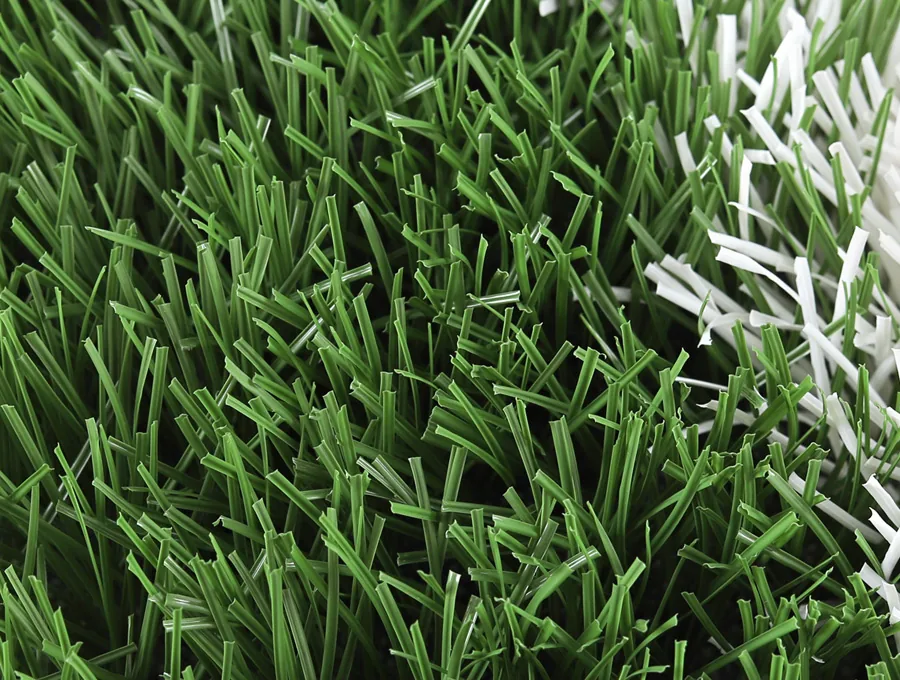
Grass Type:LFL-LK-5
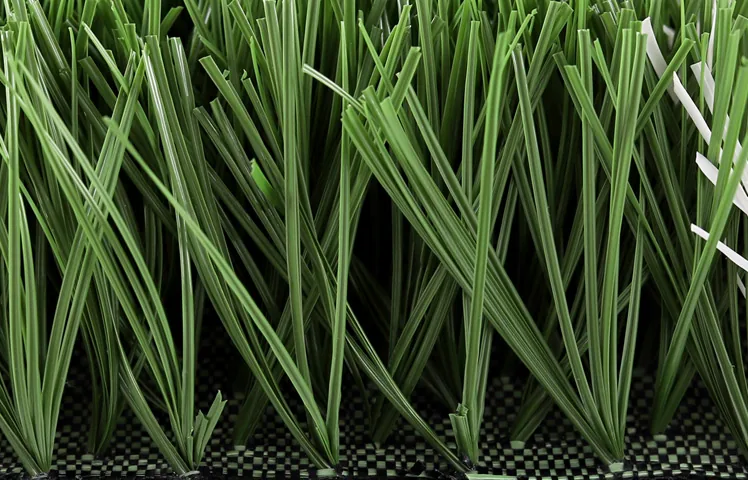
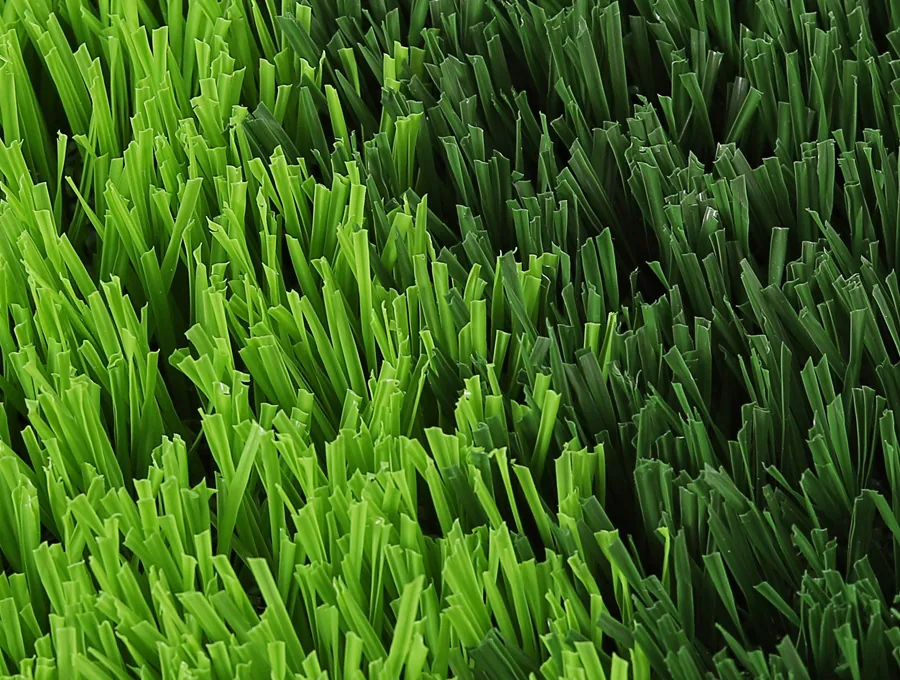
Grass Type:LFL-FT-75
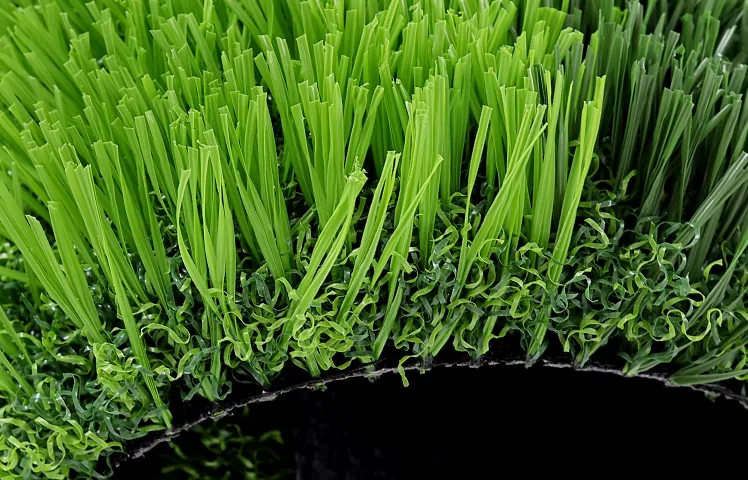
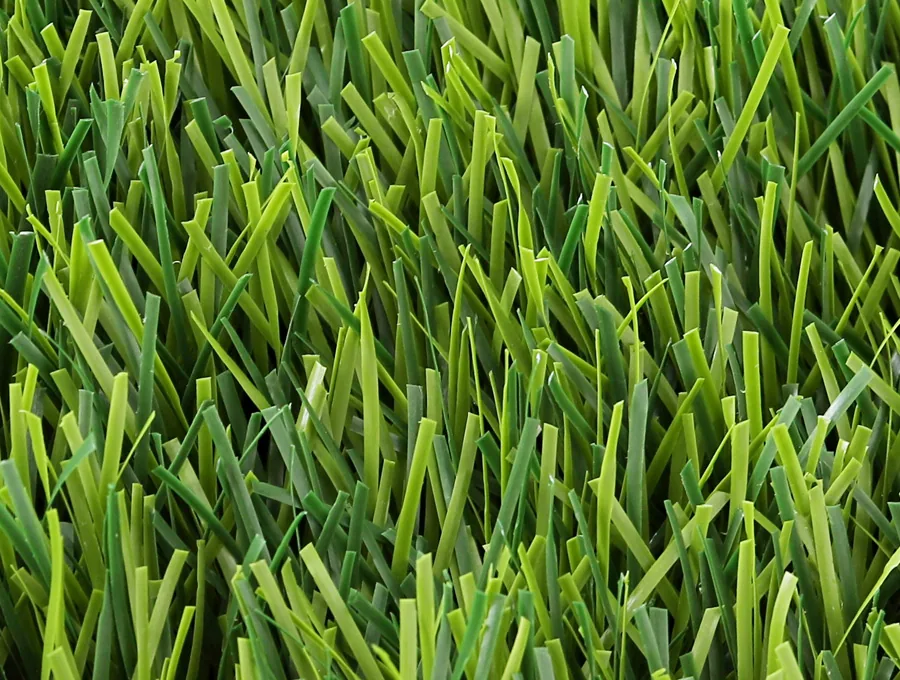
Grass Type:LFL-YD-004
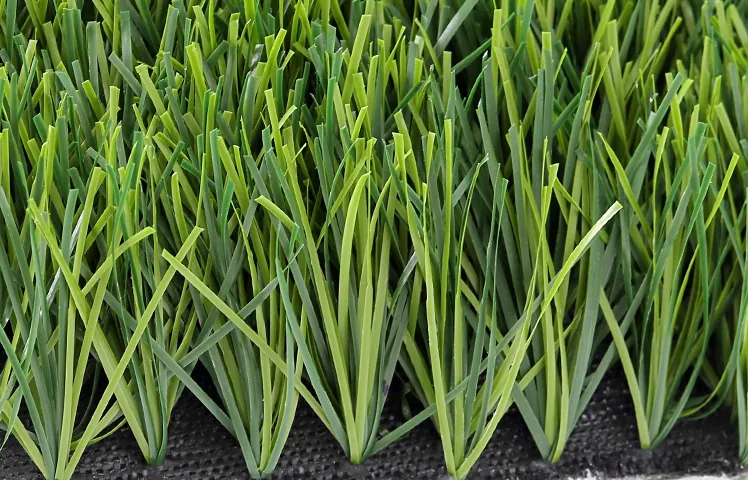
LFL Football Grass
Artificial football grass is mainly made of PE yarn, available in infill and non-infills types. The pile and yarn are engineered to FIFA Quality Programme performance requirements for wear resistance, ball roll and UV stability. Shock absorption is a property of the whole pitch build — base, shockpad and infill together — which is why we supply the supporting test documentation your installer needs.
Wholesale football field grass, bought direct from the factory
Buying wholesale football field grass is not the same as buying a few rolls for a garden. A pitch order is measured in thousands of square metres, shipped in containers, and installed to a specification that has to survive years of studs, weather and daily training. That changes what matters: fixed yarn specifications instead of best-effort substitutions, documented density and Dtex so batch twenty matches batch one, drainage that matches your rainfall, and a roll width that keeps seams — and labour — to a minimum.
We are a manufacturer, not a trading company. We extrude the yarn, tuft it, coat the backing and finish the rolls in our own plant, which is why we can hold a specification across repeat orders and quote wholesale football field grass at factory prices. This page covers what to specify, the models we build, and how an order runs from sample to shipment.
What pile height does your pitch need?
Pile height is the first decision because it drives how the ball rolls, how much infill you buy and what the pitch costs per square metre.
| 40 mm | 5-a-side and community pitches, multi-use games areas | Fast surface, low infill, lowest cost per m². Often no infill at all. |
| 45 mm | Training pitches, academies, school grounds | Plays faster than 50 mm and needs less infill — the practical choice for sites used every day. |
| 50 mm | Competition and semi-professional pitches | The standard full-size specification: full-looking surface, predictable ball roll, enough pile for a proper infill layer. |
| 60 mm | Professional and multi-sport pitches shared with rugby | Deepest pile, most infill, best shock absorption where player safety testing is required. |
For most wholesale football field grass enquiries the answer is 50 mm, with 45 mm for training sites. If the installation has to pass shock-absorption testing, pile height is only part of the answer — the shockpad and infill depth matter just as much.
The surface is one layer of the pitch, not the pitch
This matters commercially as well as technically. An installed football field is a system: compacted sub-base, drainage layer, optional shockpad, the turf, and the infill that holds the pile up. Each layer changes how the finished field performs, and no single layer can be certified on its own.
A note on terminology, because it comes up in every tender: the FIFA Quality Programme certifies installed pitch systems — base, shockpad and turf together, tested on site. It does not certify a roll of turf sold on its own, and no manufacturer can give you a FIFA certificate for a carpet. What we can do is engineer the turf to the requirements of the programme and supply the supporting test documentation so your installer can take the completed field through testing. Our 50 mm football turf is built to that brief.
Our football turf models, by specification
Every build below uses UV-stabilised S-shape yarn on a perforated backing. What changes is pile height, density window and yarn weight — the three numbers that decide how a pitch looks, how it plays and what it costs.
| Model | Pile | Density | Yarn | Best for |
| 50 mm football turf | 50 mm | 10,500 tufts/m² | 12,000 Dtex S-shape monofilament | Competition pitches; engineered to FIFA Quality Programme requirements |
| s7-3 fixed density | 50 mm | 10,500 tufts/m² (fixed) | 13,000 Dtex S-shape | Phased installations and section-by-section replacement — every batch identical |
| s7-5 custom density | 50 mm | 8,820–12,600 tufts/m² | 5,800–13,000 Dtex S-shape | Price-sensitive markets where you specify to a landed cost |
| s7-1 high density | 50 mm | 10,500–13,000 tufts/m² | 7,000–13,000 Dtex S-shape | Competitive pitches under heavy weekly use |
| s7-4 training pitch | 45 mm | 8,820–12,600 tufts/m² | 5,800–13,000 Dtex S-shape | Academy and training grounds, 7-a-side conversions |
The yarn in all five builds is UV-stabilised and tested to 5,000+ hours of accelerated exposure; the engineering behind it is explained on our artificial grass yarn technology page. If you are not sure which build fits your market, send the target price per square metre and the level of play and we will propose the closest match.
Infill: what goes into the pile
Football turf is almost always infilled, because the infill is what keeps the pile standing, adds weight against wind uplift, and tunes how the ball rolls and how the surface absorbs impact.
- Silica sand — the base layer in most football systems. Around 12–20 kg/m² at 45–50 mm.
- SBR rubber — the performance layer on top of the sand. Typically 4–8 kg/m², and more where shock absorption has to be proven.
- TPE — a cleaner-looking, lower-odour alternative where heat and smell matter.
- Cork — organic, cooler underfoot, popular for school and community fields in hot climates.
Infill quantity is a cost line as real as the turf itself, and it is one of the reasons a 45 mm training pitch lands cheaper than a 50 mm competition pitch. Ask us for the infill schedule alongside the quote so you can price the whole installation rather than the carpet alone.
Drainage and base build-up
Every model we build for football uses a perforated backing so water passes through the carpet instead of running off it. What happens underneath decides how fast the field is usable again after rain: a compacted and drained sub-base, a geotextile separation layer, and a graded aggregate layer. On pitches in monsoon or high-rainfall markets, drainage design is the difference between a field that is playable the same afternoon and one that holds water for days.
We supply perforation data and drainage rates for each build so your civil contractor can size the base correctly.
Heat, UV and colour retention
Ultraviolet light and surface temperature are the two things that age a pitch fastest, and both matter more in Africa, the Middle East and South America than in northern Europe. The yarn in our football turf is masterbatched with UV stabilisers before extrusion, so the protection sits inside the fibre, and each build is tested to 5,000+ hours of accelerated UV exposure.
Colour is specified from several green shades rather than one flat tone, which is what makes a large field read as natural instead of uniform. For hot-climate projects we also advise on infill choice — cork and lighter-coloured infills stay cooler underfoot than black SBR. Buyers importing into African markets can find the full specification and trade route in our guide to artificial grass for Africa.
Roll widths, packing and shipping
Football fields are installed in few, wide pieces whenever possible, because every seam is a place where a pitch can lift. We supply in rolls up to 15 ft (4.57 m) wide, cut to the lengths in your layout so the installer works with the fewest joins.
For wholesale orders we prepare a loading plan before shipment showing roll lengths, pallet layout and container utilisation, so you know what is arriving and how it stacks. Tell us the port and we will quote FOB or CIF with the loading plan included.
OEM and private-label programmes
A large share of our football turf leaves the factory under someone else’s brand. We produce custom pile heights, densities, yarn shades and backing builds against a target specification, apply your label and packing marks, and hold that specification for repeat orders. If you sell into several markets at different price points, we can build you a two- or three-tier range that shares one colour reference so the surface looks consistent across the catalogue.
What affects the wholesale price of football field grass?
When you compare wholesale soccer turf quotations, compare the complete specification rather than a single price per square metre. The largest cost drivers are pile height, yarn Dtex, tufting density, backing construction, roll widths and the quantity packed into each container. A low headline price can also exclude infill, delivery to port, testing documentation or a loading plan, so ask every supplier to quote the same scope.
For an artificial grass for soccer field project, tell us the pitch size, level of play, target market and preferred trade term. We can then propose a specification at the right performance level instead of quoting the same carpet for a school five-a-side area and a full-size competition pitch.
Container loading, trade terms and installation support
Depending on pile height, density and roll length, one 40HQ container can hold approximately 7,500–12,000 m² of football turf. We prepare the roll layout and loading plan before production is packed, so the delivered quantities match the pitch dimensions and installation sequence.
We can quote EXW, FOB, CIF or DDP according to your preferred purchasing route. For overseas projects, we provide remote installation guidance as standard and can discuss on-site installation support for suitable orders. Send the destination country, nearest port and required delivery date with your enquiry so freight and installation options can be priced together.
Documentation we supply with every order
- Specification sheet: pile height, yarn type and Dtex, tufting density, face weight, backing build
- Accelerated UV exposure test report
- Abrasion and tuft-withdrawal data where required
- Perforation and drainage data for the base design
- Loading plan and packing list
If a tender document asks for a specific test or certificate, send us the clause and we will confirm in writing what we can provide before you commit.
How to order wholesale football field grass
- Tell us the project — pitch size, level of play, climate, target budget per square metre.
- Get a specification — we propose a model, infill schedule and backing build.
- Approve a sample — a physical A4 sample of the exact build, not a lookalike.
- Confirm the order — production against the frozen specification, with the loading plan issued before shipping.
- Install — we support your installer with base and infill guidance, and the documentation pack for testing.
Send pitch drawings or a simple dimension sketch to dx@lflgrass.com, or use the contact form, and we will return a specification, a wholesale quotation and a loading plan. Buyers who are already in Yiwu can compare football turf samples at our local artificial grass sample room.
Frequently asked questions
What is the best pile height for a football field?
50 mm is the standard for competition and semi-professional pitches, and 45 mm is the practical choice for training grounds and academies because it plays faster and needs less infill. Community and 5-a-side pitches often use 40 mm, and 60 mm is specified where shock absorption has to be proven or the pitch is shared with rugby.
Is your football turf FIFA certified?
No roll of turf can be — the FIFA Quality Programme certifies installed pitch systems, tested on site. Our 50 mm football turf is engineered to the requirements of the programme and is supplied with supporting test documentation so your installer can take the completed field through testing.
How much infill does a 50 mm pitch need?
A typical 50 mm build takes roughly 12–20 kg/m² of silica sand plus 4–8 kg/m² of SBR or TPE performance infill. The exact figure depends on the density of the turf and the level of play; we supply an infill schedule with every quotation.
What is the minimum order quantity?
Wholesale football field grass is normally quoted by the project or container. A 40HQ can hold approximately 7,500–12,000 m² depending on pile height, density and roll length. Smaller trial quantities can be arranged for buyers placing a first order; send the required area and destination so we can confirm the most economical packing option.
Can you match a specification we already sell?
Yes. Send the specification sheet or a sample of the turf you currently buy — pile height, Dtex, density and backing — and we will match it, or propose the closest build that meets the same price point.
How long does production and shipping take?
Production is typically 15–25 days after the specification and sample are approved, depending on quantity and yarn colour. Shipping time then depends on the destination port; we issue the loading plan before the container leaves the factory.
Will the pitch hold its colour in a hot climate?
UV-stabilised yarn is masterbatched before extrusion and tested to 5,000+ hours of accelerated exposure, which is what keeps the colour in high-radiation markets. Infill choice matters too — cork and lighter infills stay cooler underfoot than black rubber.
Can you produce the turf under our own brand?
Yes. We run OEM and private-label programmes with custom pile heights, densities, yarn shades, backing builds, labels and packing marks, and we hold the specification for repeat orders.
Shipping a football pitch: container loading, trade terms and installation
Once the turf specification is agreed, a pitch order comes down to three logistics questions: how much of the pitch fits in a container, which trade term you want to buy on, and who is on site to lay it. Getting those right is what keeps a project on schedule.
What fits in one container: 7,500–12,000 m² of football turf
One container carries 7,500 to 12,000 m² of football turf. That is less than a landscape order of the same volume, and the reason is the specification: football turf is built taller and denser than garden turf, so each square metre takes up more of the box.
| Top of the range | Around 12,000 m² | 45 mm training builds at lower density — the lighter end of the football range |
| Bottom of the range | Around 7,500 m² | 50–60 mm competition builds at high density, with a heavier backing |
For context, a full-size 11-a-side pitch is roughly 7,000 m², so a single container is generally one full pitch or a pitch plus training area — which is why the loading figure is decided by the pile height and density you specify, not by the container.
Send us the build you intend to order and we will confirm the exact container quantity for it, plus a loading plan showing roll lengths, pallet layout and how the rolls come off in the order you need to lay them. On multi-pitch orders we plan the cuts across the whole order so the seams fall where your installer wants them.
Trade terms: EXW, FOB, CIF or DDP
| EXW | You collect from our factory. Usually only chosen by buyers already consolidating in China. |
| FOB | We deliver to the port and load; you handle the sea freight. Common with an established freight forwarder. |
| CIF | We arrange freight and insurance to your port — the term most African, Asian and South American pitch projects are quoted on, with your own broker clearing the goods. |
| DDP | We deliver to the site with freight, clearance and duty handled. The simplest option for a club or contractor buying a single pitch as a package. |
Ask for the quotation on the term you will actually buy on, and ask what it includes. Port handling, inland haulage and duty sit in different places under each term, and the gap between two quotes for the same pitch is often entirely in those lines rather than in the turf.
Installation: remote or on site
- Remote support. Base and drainage build-up guidance, the cutting plan, seam layout, infill schedule and a commissioning checklist, with video support while your crew works. This is the usual route where you already have a pitch contractor.
- Our team on site. We travel to your country to supervise or carry out the installation, for one pitch or a programme of several. Travel, accommodation and visa arrangements are quoted with the order and we will tell you the notice we need.
Either way, the order travels with the documentation pack: specification sheet, UV test report, perforation and drainage data, infill schedule, cutting plan and loading plan. If the pitch has to pass shock-absorption or ball-roll testing on completion, that pack is what your installer works from.