Short answer: Artificial grass sourcing in China starts in Yiwu when you want to inspect the material yourself, compare suppliers in person, and ship a modest volume without being forced into a full container. A 500 m² order is a normal order — LFL Grass’s minimum order quantity (MOQ) is 500 m² — and Yiwu’s freight forwarders consolidate part-loads (LCL), so you pay for what you need rather than for a whole 40HQ. You get the biggest advantage over buying online when you stand in a sample room, hold the pile against the backing, and compare colours under natural light before you commit.
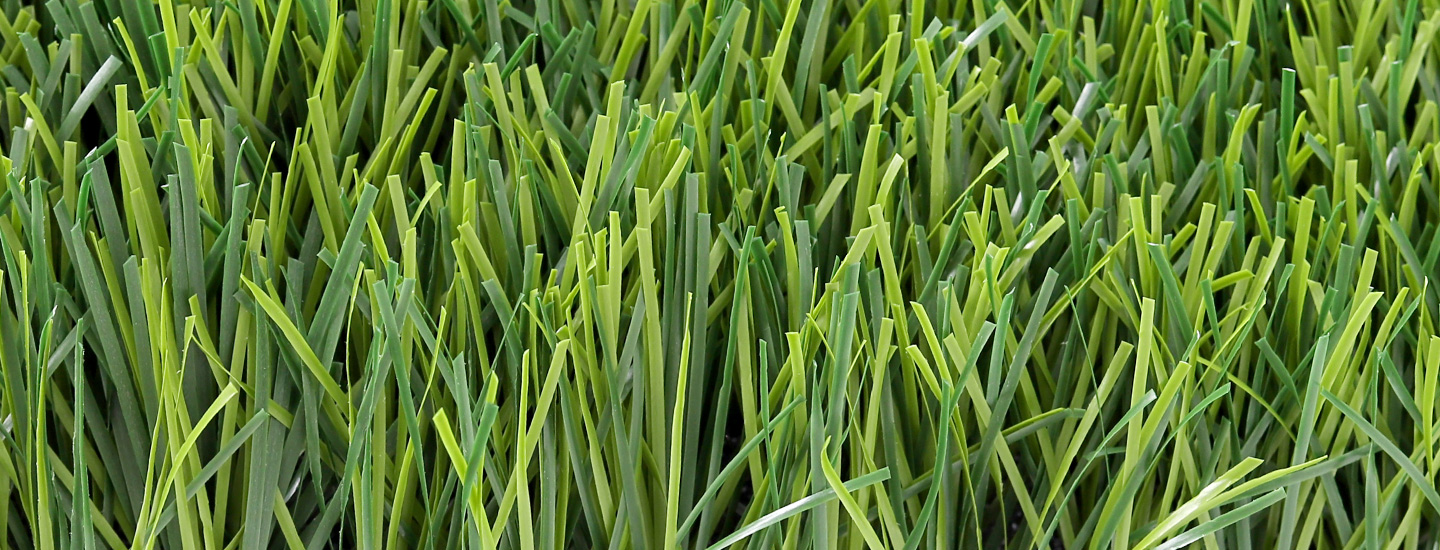
This guide covers what to check, how customization actually works across landscape, sports and pet grass, what Amazon sellers specifically need, and how to plan the trip — including the visa route most eligible buyers can use.
Why Yiwu is the right place for artificial grass sourcing
Yiwu is not a small local market. It is the world’s largest wholesale centre for small commodities: nearly 80,000 stalls offering more than 2.1 million products, with total trade reaching about US$124 billion in 2025, up 25.1% year on year. Trade with Africa alone rose 23.4% to RMB 150.7 billion. (China-Global South Project, July 2026)
That scale matters for a specific reason: it means the city has dense, competitive freight-forwarding infrastructure. Consolidation is routine here, not a favour a supplier has to arrange specially.
The demand backdrop is equally strong. The global artificial turf market was valued at US$7.3 billion in 2025, is estimated at US$7.8 billion in 2026, and is projected to reach US$13.7 billion by 2033 — an 8.3% CAGR. Asia Pacific holds the largest regional share at 32.2%, and China holds the largest country share. Sports accounts for 63.1% of applications and polyethylene for 63.1% of material volume. (Grand View Research, June 2026)
The same report notes that growing customization in pile height, texture and colour is one of the trends supporting demand — which is exactly where a manufacturer with a modifiable production line beats a trading company reselling fixed stock specifications.
How do you customize artificial grass? The five specifications that matter
Customization is not a slogan; it is a list of decisions. When you talk to a factory in Yiwu, these are the five variables to pin down:
| Specification | What it controls | Why it matters to your market |
|---|---|---|
| Pile height | Blade length, from short decorative turf to long sports surfaces | Determines look, feel and the application it can serve |
| Density | Stitches per square metre — how tightly packed the pile is | Affects durability, perceived quality and price per m² |
| Colour | Single-colour or multi-colour yarn blends | Lets you match local design tastes instead of a fixed catalogue colour |
| Yarn shape & material | Filament cross-section and polymer (PE / PP) | Drives softness, resilience after foot traffic, and UV performance |
| Roll width & length | Finished roll dimensions | The single biggest driver of your shipping and storage cost |
Roll width deserves its own paragraph. If you sell online or ship to a market where installers work from small vans, a 4 m wide roll is a liability. Ask what widths are actually available — for example 5 ft, 7.5 ft, 10 ft and 15 ft — and get lengths cut to your order rather than accepting a standard roll. Cutting roll size to your market is often the difference between a product that ships economically and one that does not.
Which type of artificial grass do you need? Landscape vs sports vs pet
Most sourcing mistakes come from ordering one product for three different jobs. These are genuinely different products:
| Landscape grass | Sports turf | Pet grass | |
|---|---|---|---|
| Primary buyer | Homeowners, landscapers, developers | Clubs, schools, contractors | Pet owners, pet retailers |
| What it optimises for | Appearance, softness, low maintenance | Wear resistance, shock absorption, drainage | Drainage and odour control |
| Key spec to confirm | Colour stability and pile softness | Density plus infill and shock pad system | Backing perforation and drainage rate |
| Common failure mode | Fading and matting under strong sun | Compaction and poor drainage | Urine smell and bacterial build-up |
If you are buying for a full pitch project, the turf is only one line item. A complete package typically includes turf, wire fence, shock pad, TPE infill granules, quartz sand, goals with nets and fixing nails — confirm whether these come from one supplier or you are coordinating four.
What do Amazon sellers need from an artificial grass supplier?
Online sellers have requirements that do not show up in a normal wholesale conversation. If you sell artificial grass on Amazon or a similar marketplace, put these on your checklist:
- Batch-to-batch consistency. A colour or pile difference between your first container and your restock generates returns and negative reviews. Ask how the supplier controls colour across production runs — and order a physical sample of each batch before it ships.
- Roll dimensions matched to fulfilment. Smaller, lighter rolls ship and store more cheaply. Landscape and pet grass sell better online than large-format sports turf for exactly this reason.
- Private label and packaging. Confirm the supplier will produce to your brand, with your labelling, rather than shipping generic factory packaging.
- Realistic replenishment lead time. Long restock gaps cause stockouts during peak season. Get the production lead time in writing, not as an estimate.
- Test reports. Request them before you list, not after a customer complains.
Pet grass in particular is an online-friendly category because the customer problem is specific — drainage and urine odour control — and the product can be described and shipped in manageable roll sizes.
Can you visit an artificial grass showroom in Yiwu — and how do you get there?
Yes, and you should. Visiting before you buy is the single highest-value thing you can do, because photographs cannot tell you how a pile feels, how dense the backing is, or whether the green looks artificial under real daylight.
Do you need a visa?
Many eligible buyers can enter without applying for a visa in advance. China’s 240-hour (10-day) visa-free transit policy currently applies to nationals of 55 countries, through 65 designated ports in 24 provinces. Foreign nationals covered by the policy may, within the permitted areas, engage in business activities, visits, travel and family reunions. (National Immigration Administration)
Two details that matter for a sourcing trip:
- Yiwu International Airport is itself an eligible port, and the permitted stay area for Zhejiang covers the entire province. (China Briefing)
- It is transit, not a general visa waiver. You must hold a confirmed onward ticket to a third country or region within 240 hours, and your passport must be valid for more than three months from arrival. The origin and destination countries must be different. If you are staying somewhere other than a hotel, you must register your accommodation with the local police within 24 hours.
Always verify your own eligibility with the NIA or your airline before booking — and check with the airline at check-in, since boarding refusals do happen when ground staff are unfamiliar with the policy.
Can someone else visit for you?
Yes — and this is common. Many buyers never travel themselves. They send a friend, partner or agent who is already in Yiwu to inspect the material and place the order on their behalf. If you are sourcing for a market where a buying agent is normal practice, use one.
How to structure the visit
- Book a full day in Yiwu; the market is too large to cover casually.
- Bring your end-use brief: application, target market, expected volume, target retail or delivered price.
- Ask every shortlisted supplier for a written EXW, FOB or CIF quote before you leave the city. Verbal pricing does not survive the trip home.
- Take physical samples of each candidate. Photographs do not settle disputes later.
What are the trade terms, minimum order and shipping options?
Four points to confirm before you commit:
| Item | What to establish |
|---|---|
| Trade terms | EXW, FOB, CIF or DDP — ask which the supplier quotes natively rather than assuming |
| Minimum order | Ask for the figure in m², not in containers — a container-volume MOQ prices small projects out. (LFL Grass’s MOQ is 500 m², with no container requirement.) |
| Container requirement | Ask directly whether part-load (LCL) consolidation is possible. If a supplier will only quote full containers, small projects are priced out |
| Freight forwarding | Ask whether the supplier arranges forwarding or expects you to appoint a separate agent |
If you are testing a new market, LCL plus a modest minimum is the low-risk path: you validate sell-through before committing to a container.
What should you verify before you pay?
Ask for quality control before shipment, not after arrival. At LFL Grass every order is inspected for pile height, density, colour consistency and backing strength before it leaves — the point is to catch a problem while it is still fixable, not to argue about it after the container has sailed.
A structured pre-shipment check covers:
- Pile height and density measured against the agreed specification
- Colour consistency across the production batch — not just against a single reference sample
- Backing strength and adhesion
- Quantity and packaging count verified before loading
- Load securing: rolls fixed inside the container so they cannot shift in transit
Test reports should be available on request. Ask what the supplier can actually substantiate, and treat any credential they cannot document as absent.
Frequently asked questions
What is the minimum order quantity for artificial grass from a Chinese supplier?
It varies by supplier, and the number that matters is the one quoted in square metres. Many suppliers quote container-volume minimums — often one 20GP or 40HQ — which prices small projects out entirely, so ask for the m² minimum and whether the supplier will ship LCL. LFL Grass’s minimum order quantity (MOQ) is 500 m², with no container requirement: a single small pitch is a normal order, consolidated as a part-load out of Yiwu.
Can I visit an artificial grass showroom in Yiwu without an appointment?
Not every supplier keeps one, so ask first. Where a sample room exists, walking in during business hours is normal. Confirm the address and get a map pin sent to you before you travel across the city.
Do I need a visa to visit Yiwu for sourcing?
Eligible nationalities may use China’s 240-hour visa-free transit, and Yiwu International Airport is a designated port with Zhejiang Province as the permitted area. It requires a confirmed onward ticket to a third country and a passport valid beyond three months. Verify current rules with the NIA before booking.
Which is better for my market: landscape grass, sports turf or pet grass?
Match the product to the end user’s problem rather than to price. Landscape sells on appearance and low maintenance; sports sells on durability and drainage; pet grass sells on odour and drainage control. Ordering one product for all three is the most common sourcing error.
What roll width should I order?
The width that matches how your customers install and ship. If your market works from small vehicles or sells online in consumer sizes, narrower rolls reduce cost and damage. Ask what widths are available and get lengths cut to order.
What do Amazon sellers need to check that traditional importers do not?
Batch-to-batch colour consistency and private-label packaging. An inconsistency between your first and second shipment generates returns that a B2B buyer would simply negotiate over.
Can I send someone else to inspect the goods in Yiwu?
Yes. Sending an agent, partner or friend who is already in Yiwu is standard practice, and suppliers who handle export orders are used to working that way.
How long does production and shipping take?
Ask for the production lead time in writing along with the shipping mode you have chosen. LCL consolidation adds time at the port compared with a full container, so plan restocks around the slower of the two, not the faster.
Where artificial grass sourcing goes next
Once the specification is fixed, these pages cover the next decisions:
- Yiwu artificial grass supplier profile — factory, MOQ and shipping terms.
- Landscape artificial grass range — 25-51 mm garden and commercial turf.
- Soccer field grass — 40-60 mm sports systems.
- Pet grass — 30-40 mm turf for kennels and backyards.
- Yarn technology guide — how fibre profile changes look and lifespan.
The short version
Source artificial grass in Yiwu if you want three things: the ability to inspect material in person, a minimum order measured in square metres rather than containers, and access to freight consolidation that makes small volumes viable. Get your customization decisions — pile height, density, colour, yarn and roll width — fixed in writing; match the product type to the end user; and do not leave the city without a written quote.
If you are in or travelling to Yiwu, you are welcome to visit the LFL Grass sample room and compare materials side by side before you decide. If you cannot make the trip, send someone who is already here — we work with them exactly the same way. Message us on WhatsApp and we will send you our address and a map pin.
Sources
- Grand View Research — Artificial Turf Market Size, Share & Trends Analysis Report, 2026–2033 (published June 2026). https://www.grandviewresearch.com/industry-analysis/artificial-turf-market
- National Immigration Administration of China — Visa-Free Transit Policies (240-hour policy, 55 countries, 65 ports). https://en.nia.gov.cn/n147418/n147463/c183412/content.html
- China Briefing (Dezan Shira & Associates) — China 240-Hour Visa-Free Transit: What to Know. https://www.china-briefing.com/news/china-resumes-144-hour-visa-free-transit-policy-for-foreigners-who-can-apply/
- China-Global South Project — Yiwu Model Offers Blueprint for Africa Trade (21 July 2026). https://chinaglobalsouth.com/2026/07/21/china-yiwu-model-africa-trade-blueprint/
Market figures are as published by the cited sources and reflect their respective publication dates.
