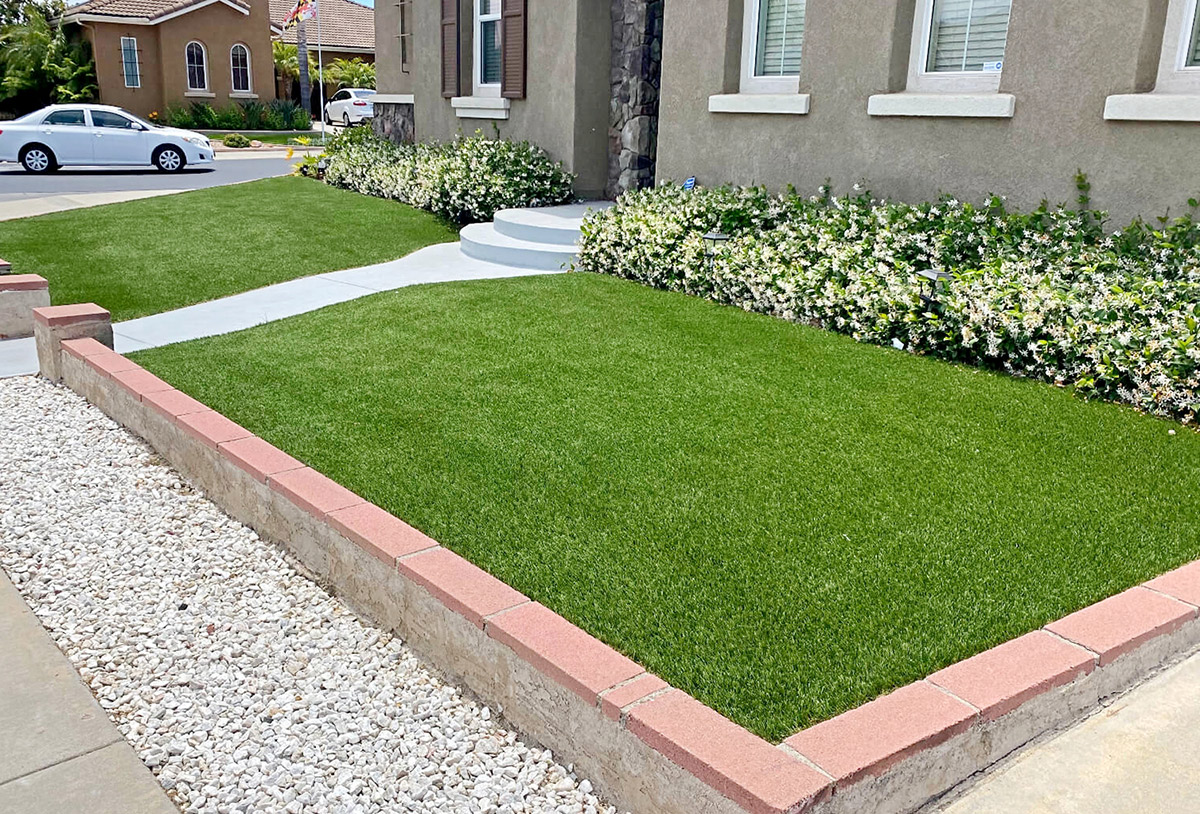
Artificial landscape grass, also known as synthetic turf, has become a popular landscaping choice for modern residential, commercial, and public green spaces. With realistic texture and stable performance, it effectively replaces natural grass and solves many common landscaping problems such as seasonal withering, mud accumulation, and high maintenance costs.
One of the biggest advantages of artificial landscape grass is its zero seasonal restriction. It maintains a fresh, lush green appearance all year round, whether in hot summer or cold winter. Unlike natural lawns that turn yellow and wither in extreme weather, synthetic turf keeps landscapes neat and vibrant at all times.
Low maintenance is another core feature. Artificial grass requires no watering, mowing, fertilizing, or pesticide treatment. Daily cleaning only needs simple sweeping and rinsing, which greatly saves labor and water resources. It is especially suitable for water-deficient areas and projects with limited later maintenance budgets.
In terms of durability, high-quality landscape turf features excellent wear resistance, anti-aging, and UV protection. It can withstand frequent pedestrian activities and has a long service life. The excellent drainage structure also ensures no water accumulation after rain, keeping the site clean and tidy.
Widely used in diverse scenarios, artificial landscape grass fits residential yards, rooftop gardens, community green belts, park landscapes, playgrounds, and commercial decoration. It provides an eco-friendly, economical, and aesthetic green solution for modern landscape design.
